

Introduction: The Toxic Atmosphere
On Sunday, August 18, 2024, Archbishop Nicholas Duncan-Williams delivered a compelling sermon at Action Chapel International on Spintex Road, Accra.
The sermon, titled “Words Matter,” focused on the impact of spoken words and the spiritual principles governing them.
With a mix of personal anecdotes, biblical references, and fervent exhortations, the Archbishop captivated his audience, urging them to recognize the power and consequences of their words.
Archbishop Duncan-Williams began by addressing what he perceived as a “toxic atmosphere” prevalent during election periods, not only in Ghana but across Africa.
He lamented the negative energy created by curses and harmful words spoken by believers and citizens alike. “We are speaking words that are causing pollution in the atmosphere,” he stated, emphasizing that these words have the power to affect personal lives and the nation as a whole.
The Power of Words
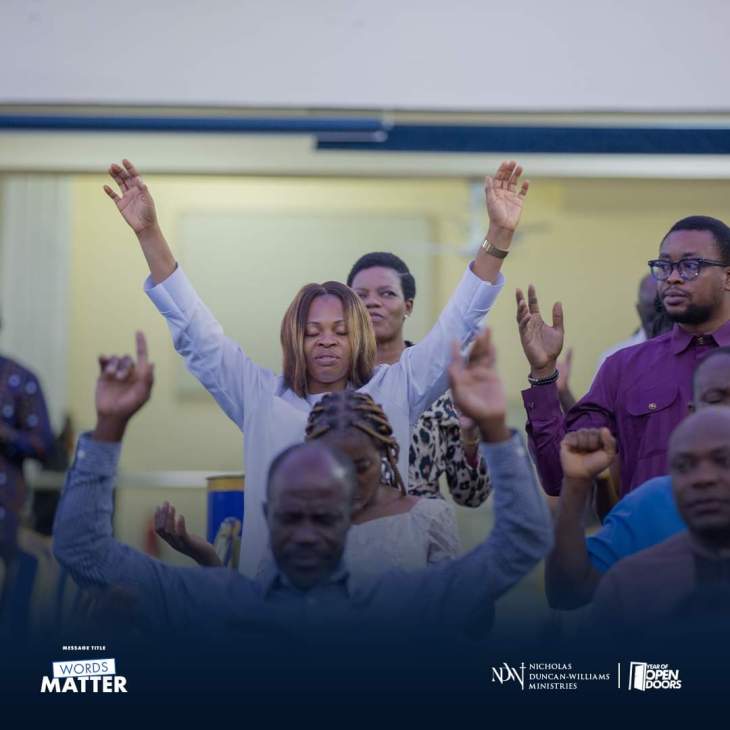
Central to the Archbishop’s message was the biblical principle that words carry significant power. He recounted a personal story involving his mother and sister, illustrating how words spoken in anger had long-term consequences. “The words of our mother gave the adversary authorization to afflict me through childbearing,” he explained, highlighting the spiritual implications of careless speech.
He drew attention to Genesis 12:3, where God promises to bless those who bless and curse those who dishonor. This scripture, he argued, underscores the serious nature of words and their potential to invoke blessings or curses. “I believe in blessings, and I also believe in curses,” he affirmed, urging the congregation to be mindful of their speech.
Lessons from Personal Experience

Archbishop Duncan-Williams shared another poignant story from his life, involving a conflict with his spiritual father, Archbishop Idahosa. He admitted to youthful arrogance and the consequences that followed when he dishonored his mentor.
“I was very stupid,” he confessed, acknowledging that his actions led to significant challenges. This experience taught him the importance of respecting both biological and spiritual fathers, as they play crucial roles in one’s life journey.
Biblical Foundations and Spiritual Protocols
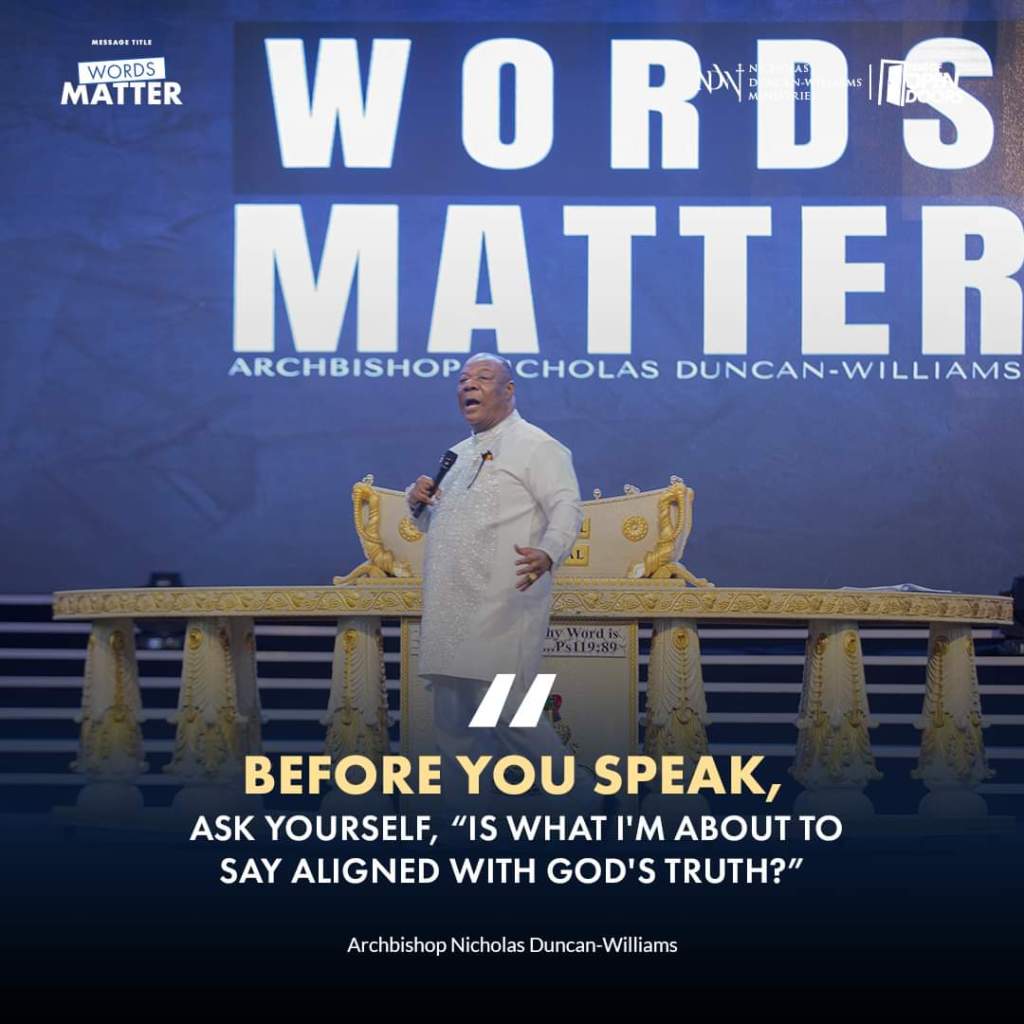
Throughout the sermon, the Archbishop reinforced his message with numerous biblical references. He cited Proverbs 6:2, “Thou art snared with the words of thy mouth,” and Isaiah 46:10, which speaks of God’s unchanging nature and the importance of declaring His counsel.
These scriptures served to remind the congregation of the divine protocols governing speech and the necessity of aligning one’s words with God’s will.
He also referenced the creation story in Genesis, where God spoke the world into existence. “God said, and it was so,” he repeated, emphasizing the creative power of words and the need for believers to speak positively and prophetically over their lives and circumstances.
Practical Applications and Exhortations

Archbishop Duncan-Williams concluded with practical applications for his listeners. He encouraged them to engage in prayer and fasting, particularly in the context of the upcoming elections, to counteract negative declarations and influence positive outcomes.
“We are enforcing the victory of the blood of the Lamb,” he declared, calling for a three-day fast to superimpose divine will over the nation’s affairs.
He urged the congregation to be vigilant in their speech, to “keep saying it until you see what you are saying,” and to counter any negative words or declarations with positive affirmations rooted in scripture.
Conclusion: A Call to Action
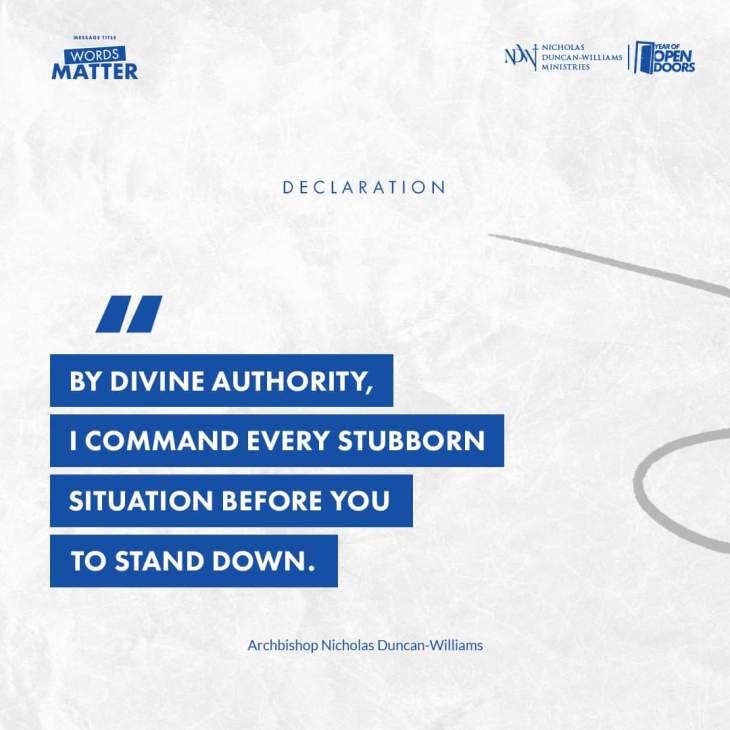
The sermon ended with a powerful call to action, as Archbishop Duncan-Williams implored his audience to take responsibility for their words and to use them as instruments of blessing and life.
“Words determine outcomes,” he reminded them, stressing that the spiritual and physical realities are shaped by what we speak.
In a world where words often seem inconsequential, Archbishop Nicholas Duncan-Williams’ sermon was a timely reminder of their enduring power and the responsibility that comes with them.
As the congregation left the chapel, they were charged with the task of speaking life, hope, and blessing into their lives and the world around them.
Discover more from Living Our Bible
Subscribe to get the latest posts sent to your email.


Leave a comment