

Introduction
The GOD Summit, an annual apologetics conference organized by the International Central Gospel Church (ICGC) and hosted by Pastor Mensa Otabil at Christ Temple East, Teshie-Accra, commenced with thought-provoking sessions.
Day 1’s afternoon session featured a compelling presentation by Rev. Joshua Obeng on the topic “The Greatest Story Ever Told.”
His address captivated attendees as he explored the uniqueness, reliability, and significance of the Gospels.
Understanding the Greatest Story
Rev. Obeng began with a bold declaration: “Jesus is the greatest man in history, and His story has been told and retold by generations.” He highlighted the unique nature of the Gospel narratives, noting that their authenticity often draws skepticism.
However, he argued convincingly that the Gospels’ reliability is grounded in their historical context, literary genre, and consistency.
“The English term Gospel,” he explained, “comes from the Greek noun *Evangelion,* meaning good tidings or good news. It was used to announce victory in battle or the enthronement of a ruler.”
He pointed to Mark 1:1, where the Gospel begins with *“the beginning of the Gospel about Jesus Christ, the Son of God,”* affirming its nature as factual truth.
The Historical Reliability of the Gospels

Rev. Obeng presented several reasons why the Gospels are historically reliable:
1. Historical Context: Unlike fairy tales such as Cinderella or Snow White, which lack historical markers, the Gospels are rooted in specific names, places, and events. “The historical context of the Gospel,” he stated, “gives us names of people who actually lived at that time and places that existed.”
2. Eyewitness Testimony: He emphasized that the apostles and other witnesses, including over 500 individuals who saw the resurrected Jesus, provide compelling evidence. “If five witnesses can convict someone in court, how much more 500?” he asked.
3. Oral Tradition: He drew parallels between the Gospels’ oral tradition and the rich oral histories of African cultures, such as those preserved by the Ashantis, underscoring the reliability of oral storytelling over generations.
4. Credibility of the Writers: Citing Luke 1:1–4, Rev. Obeng noted the historian’s meticulous attention to detail. “Luke uses terms like ‘eyewitness,’ ‘carefully investigated,’ and ‘orderly account’—words that highlight his dedication to accuracy.”
Addressing Variations and Perceived Contradictions
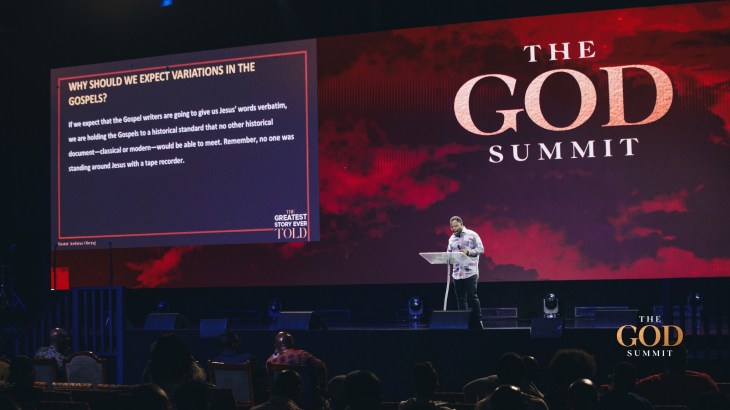
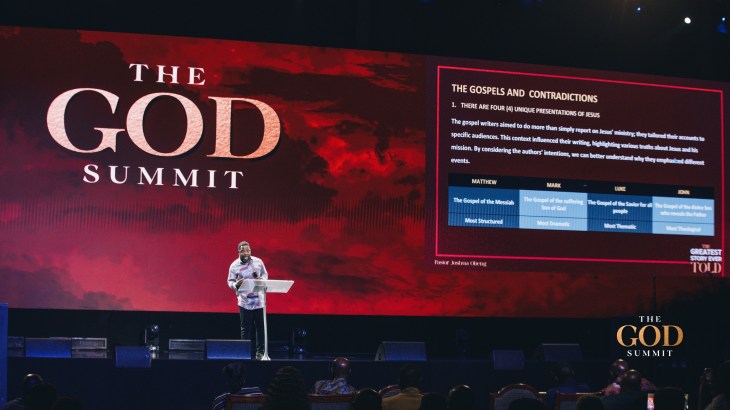
Rev. Obeng tackled common criticisms about variations in the Gospels. He explained these differences as reflections of the unique perspectives of the writers, akin to photographs of the same person in different contexts.
“Matthew presents Jesus as the Messiah, Mark as the suffering Son of God, Luke as the Savior for all people, and John as the divine Son who reveals the Father,” he elaborated.
He also addressed omissions, paraphrasing, and reordering of events, likening them to eyewitness testimonies that emphasize different aspects of the same truth. “The fact that there are variations,” he concluded, “is a testament to the honesty of the Gospels’ writers.”
Conclusion
Rev. Joshua Obeng’s presentation at The GOD Summit was a powerful reminder of the reliability and significance of the Gospels.
He closed with a profound insight from a Church Father: “If all the Gospels were the same, we would criticize them for collusion. But their variations affirm their authenticity.”
His message left the audience inspired to embrace the Gospel as “the greatest story ever told.”
The GOD Summit continues to provide a platform for deepening faith and understanding, promising more enriching sessions for all attendees.
Discover more from Living Our Bible
Subscribe to get the latest posts sent to your email.


Leave a comment