

Introduction
The God Summit, hosted by Pastor Mensa Otabil at ICGC Christ Temple East in Teshie, Accra, is a premier apologetics conference aimed at deepening the understanding of biblical principles.
On Day 1 of the afternoon session, Rev. Dr. Harry Allotey delivered a thought-provoking lecture about the complexities of Bible translations and their impact on understanding Scripture.
The Complexity of Choosing a Bible
Rev. Dr. Harry Allotey opened his session by highlighting the often-overwhelming experience of selecting a Bible. “Imagine walking into a bookstore to buy a Bible and being faced with a plethora of options,” he remarked, referencing versions like the Thomas Chain Reference Bible, ESV Reformation Study Bible, and the Life Application Study Bible.
He pointed out that these choices go beyond mere preference. “The first thing to notice,” he explained, “is the big difference between the Bible version or translation and the format that marketers use to package it.”
This distinction is crucial, as translations are directly tied to language, which is fluid and evolves over time. Dr. Allotey provided an example: “In Jesus’ time, the word ‘agape’ conveyed a clear meaning. However, in modern English, the word ‘love’ needs qualification—what kind of love are we referring to?”
Challenges in Translation

Dr. Allotey delved into the challenges of translating the Bible, emphasizing how ancient languages like Hebrew, Greek, and Aramaic often lack direct equivalents in English.
“Words in one language seldom have exact matches in another,” he explained, citing the Hebrew word ruach, which can mean wind, breath, or spirit, depending on the context.
Adding to the complexity, ancient manuscripts often lacked punctuation and spacing. “Hebrew manuscripts don’t use vowels,” he said, “and they are written from right to left. This makes the process of translation incredibly demanding.”
He also highlighted cultural and idiomatic differences, giving the example of the phrase “suffer not the children to come to me.” In contemporary English, the word “suffer” might confuse readers, but in its original context, it simply means “allow.”
Translation Philosophies
Dr. Allotey discussed the two main philosophies in Bible translation: formal equivalence (word-for-word) and functional equivalence (thought-for-thought). “Formal equivalence has value because it retains the original wording,” he noted, citing versions like the King James Version (KJV) and English Standard Version (ESV).
However, he acknowledged that such translations might include archaic terms like ‘behold’ or ‘lo,’ which modern readers may struggle to understand.
On the other hand, functional equivalence, used in translations like the New Living Translation (NLT) and Contemporary English Version (CEV), prioritizes readability. “This approach focuses on conveying the idea behind the words,” he explained, ensuring the message resonates with contemporary readers.
Choosing the Right Translation

When it comes to selecting a Bible translation, Dr. Allotey offered practical advice: “Understand the strengths and limitations of each version.”
For example, gender-neutral translations like the TNIV aim for inclusivity but may inadvertently affect theological interpretation.
He emphasized the importance of aligning the translation choice with the purpose of study. “The translation must preserve the original intention while ensuring the reader grasps its meaning,” he said.
Conclusion
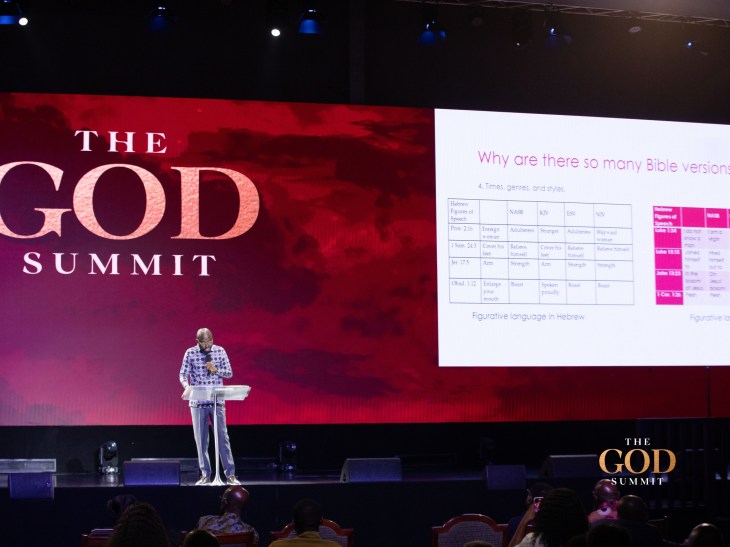
Dr. Harry Allotey’s session at The God Summit underscored the intricate process of Bible translation and the vital role it plays in understanding Scripture. By exploring linguistic, cultural, and philosophical aspects, he empowered attendees to make informed decisions about their Bible choices.
His insights served as a reminder of the enduring value of Scripture and the need for diligence in preserving its meaning for future generations.
The God Summit continues to be a beacon for those seeking deeper understanding, bridging the gap between ancient texts and modern application.
Discover more from Living Our Bible
Subscribe to get the latest posts sent to your email.


Leave a comment