

When the lights on the stage came on, we saw a figure emerge—a rugged, weathered man who resembled Esau, the oldest son of Isaac. He appeared momentarily bewildered, unprepared for the encounter with the audience gathered in the auditorium. Just as the murmurs of doubt began to ripple through the crowd, Esau composed himself, standing tall behind the lectern, ready to deliver his keynote presentation.
But before Esau could speak, the MC stepped in to formally introduce him, adhering to the protocols of the occasion. “Ladies and gentlemen, the man before you today was born into one of the richest spiritual heritages. Yet, tragically, he squandered it all for a fleeting moment of pleasure.” The audience gasped, their shock palpable, as though they had forgotten the familiar story told in the Scriptures.
The MC continued, “Esau was the firstborn of Isaac, the son of promise born to Abraham and Sarah. In his youth, he sold his birthright—the double portion inheritance due to him as the firstborn—for a mere bowl of stew. Later, he sought the generational blessing of his father but found that it had already been deceitfully claimed by his younger brother, Jacob, who had conspired with their mother, Rebekah. Ladies and gentlemen, please welcome Esau.”
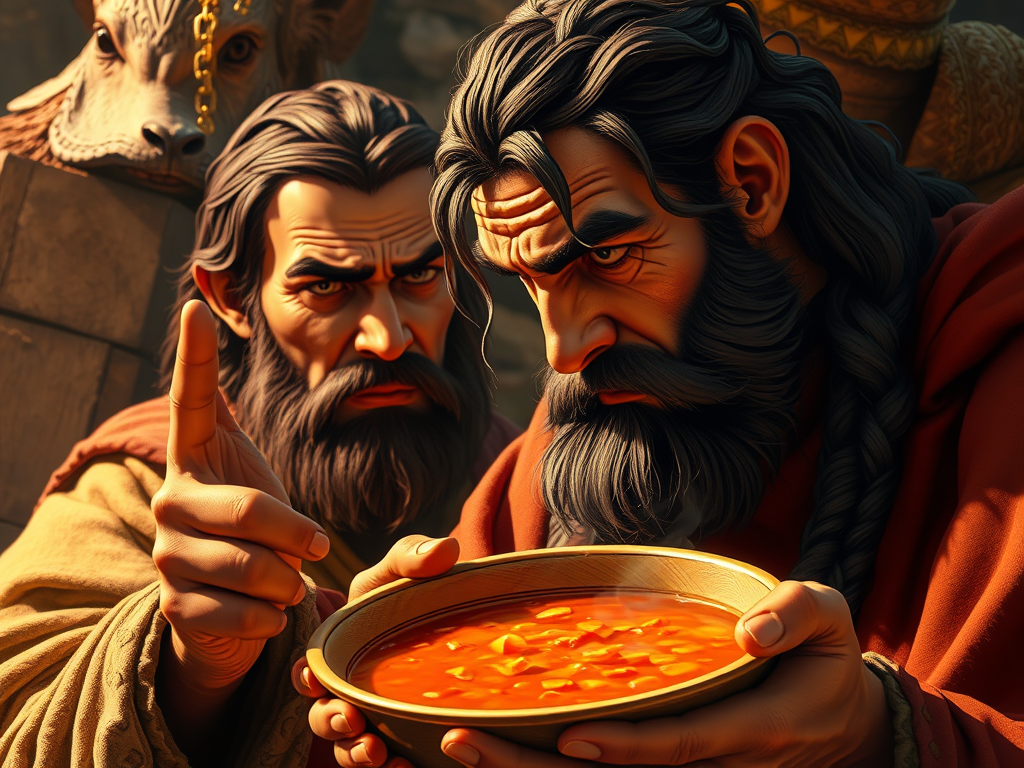
Esau stepped forward, a somber expression on his face. “Good afternoon,” he greeted the crowd. “I must admit, it is not with joy that I stand before you. I am here as a cautionary tale, a man who despised what could have been a profound spiritual blessing from God. My story is a reminder that the choices we make today can determine the trajectory of our future.”
The audience leaned in, captivated by his candid reflection. Esau continued, “The Bible warns us in Hebrews 12:16-17 not to be like me—‘a profane person, who for one morsel of food sold his birthright.’ My life serves as a lesson that we cannot sacrifice our divine inheritance on the altar of fleeting pleasures. As 2 Timothy 2:3 urges, we must endure hardship as good soldiers of Christ to claim our eternal reward.”
“If I were to live my life over again,” Esau confessed, “I would hold tightly to God’s promises, no matter the pressures of this world. In that moment of hunger, I allowed my fleshly desires to dictate my choices, and it cost me everything. If only I had recognized that temporary discomfort is not worth the loss of eternal blessings. Let me urge you: never trade what is sacred for what is trivial.”
With those final words, Esau left the stage, declining questions. His demeanor conveyed both regret and a plea for the audience to learn from his mistakes.
Discover more from Living Our Bible
Subscribe to get the latest posts sent to your email.


Leave a comment