

Sermon Review I http://www.livingourbible.com I Friday 14th November 2025
Introduction
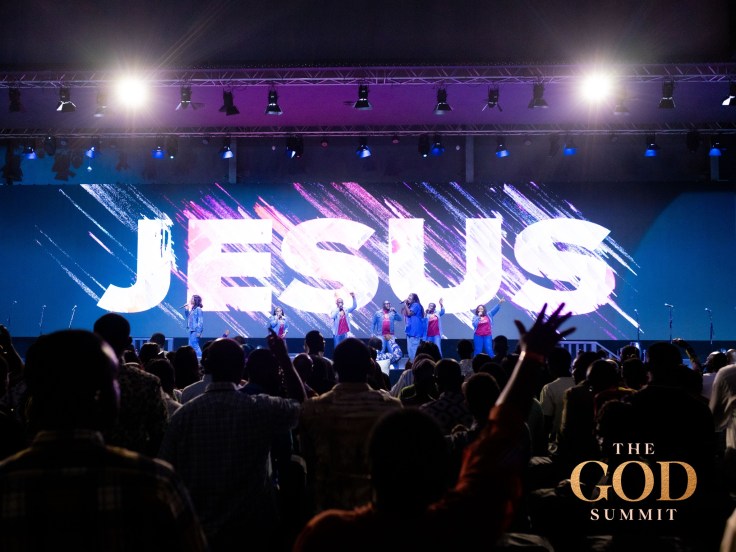
On Day 2 of The God Summit 2025 at ICGC Christ Temple East, Dr. Benjamin Shaw—president of Core Apologetics and leading researcher on the resurrection of Jesus—delivered a deeply compelling and intellectually rigorous keynote titled “The Reliability of the New Testament: The Text and Non-Christian Sources.”
Drawing from decades of academic work, including collaborations with Dr. Gary Habermas, he walked participants step-by-step through historical, textual, and external evidences that affirm the trustworthiness of the New Testament.
His presentation strengthened the summit’s mission of helping believers think critically and confidently about their faith.
Do We Have the Right Words? The Case for Reliable New Testament Texts
Dr. Shaw began by addressing the most foundational question: Are the words in our New Testament today the same as those originally written by Matthew, Mark, Luke, John, and Paul?
He noted, “This is not just a Christian question; it’s a question for every ancient text.” Using the principles of textual criticism, he compared the New Testament to the writings of Homer, Plato, Tacitus, and other classical authors.
While ancient works often have gaps of 400–1,300 years between their original writing and earliest surviving manuscripts, the New Testament stands apart: “When it comes to the New Testament, there’s about a 30-year gap,” he explained, referencing the famed John fragment P52, dated to around AD 125.
He then highlighted the staggering manuscript evidence: “If we look at just the Greek manuscripts, there are over 5,000 copies… When we add Syriac, Coptic, and quotations from the early church fathers, we get about 25,000.”
Even sceptics acknowledge this. Dr. Shaw quoted atheist textual critic Bart Ehrman, who admits: “The New Testament is preserved in far more manuscripts than any other book from antiquity.” His conclusion: “This is not a controversial point. The numbers are clear. We can be very confident that what we have written is what the original authors wrote.”
Do Non-Christian Sources Confirm the New Testament?
Dr. Shaw then demonstrated how history outside the Bible—through non-Christian writers—corroborates key New Testament events.
Josephus (AD 93–94)
Josephus, a Jewish historian, wrote about Jesus, His crucifixion, His followers, and His impact.
“Josephus offers remarkable insight into Jesus and the early Christian movement,” Dr. Shaw noted, adding that new research from Oxford University Press strongly supports the authenticity of the full passage.
Josephus confirms:
- Jesus existed
- Pilate ordered His crucifixion
- His followers continued after His death
- Christianity persisted into Josephus’ own day
Tacitus (AD 110)
Tacitus, Rome’s greatest historian, wrote that: “Christus… suffered the extreme penalty at the hands of Pontius Pilate.” He also documented that Christianity spread from Judea to Rome and that Nero brutally persecuted Christians after blaming them for the great fire of Rome. Dr. Shaw emphasized: “This movement did not die with its leader. It continued—and Tacitus had to acknowledge it.”
Lucian of Samosata
A satirist who mocked Christians, Lucian nevertheless validated their beliefs: “Christians still worship the man who was crucified… They despise death and consider themselves brothers.” These descriptions mirror New Testament teachings on resurrection hope, Christian unity, and sacrificial love.
Why This Evidence Matters for Faith
After laying out the evidence, Dr. Shaw stressed the practical implication: “Where our thoughts go, our feet follow.”
The reliability of the New Testament should lead believers to read and live Scripture daily. He cited a global study showing that reading the Bible four times a week leads to:
- 200–400% increase in evangelism
- Significant reductions in bitterness, anxiety, addiction, and depression
- Stronger spiritual growth and obedience
His appeal was simple and compelling: “If we’re going to be equipped, we have to read Scripture. Let your mind be renewed daily.”
Conclusion
Dr. Benjamin Shaw closed by affirming that both internal and external evidence overwhelmingly support the New Testament’s reliability. “God’s Word still speaks—and it transforms,” he said.
His message left participants strengthened in their confidence that the Bible they hold today is historically trustworthy, textually preserved, and divinely inspired.
About Living Our Bible
Living Our Bible is a teaching and devotional platform dedicated to helping believers grow through sound doctrine, practical Christian living, and deep scriptural engagement. Follow the blog, Facebook page, and WhatsApp channel for daily teachings, news stories, and spiritual resources.
Discover more from Living Our Bible
Subscribe to get the latest posts sent to your email.


Leave a comment