
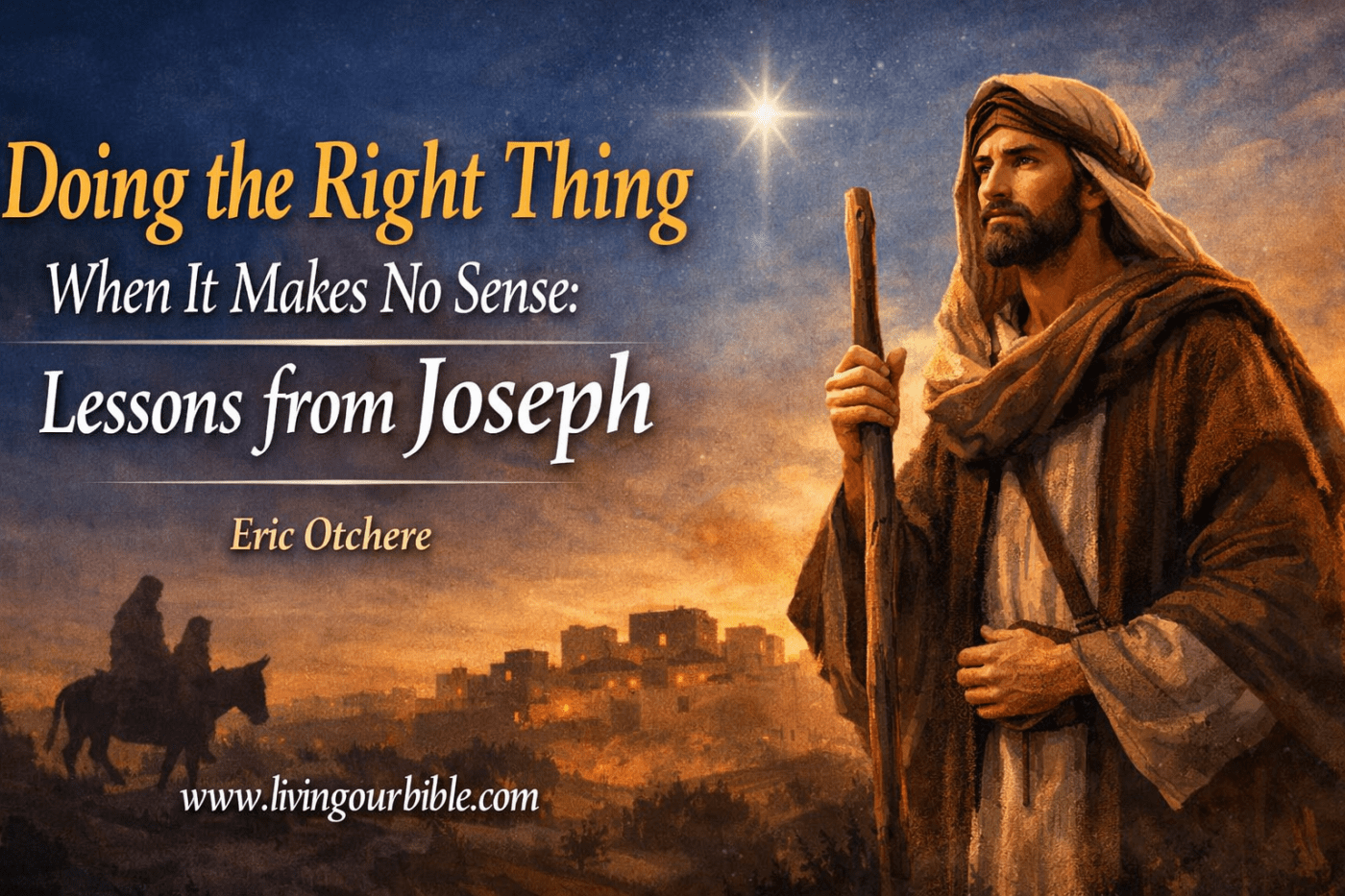
Eric Otchere I http://www.livingourbible.com I Tuesday 27th January 2026
Introduction
In the unfolding story of Christ’s birth, Scripture draws our attention not only to Mary and the miracle of the virgin conception, but also to a quiet, faithful man named Joseph. Matthew describes him with a powerful phrase: “Joseph her husband, being a just man…” (Matthew 1:19).
In a moment that could have shattered his reputation, future, and peace, Joseph chose righteousness over reaction, obedience over outrage. His story challenges believers today to live justly when circumstances are confusing and costly.
This article reflects on the sermon “Joseph: A Just Man” based on Matthew 1:18–25 .
A Just Man in an Unjust Moment
Joseph’s righteousness was tested when Mary, his betrothed wife, was found to be pregnant before they came together. Under Jewish law, this situation could have led to public disgrace or even death (Deuteronomy 22:23–24).
Yet Joseph did not rush to judgment. Scripture says he was “not willing to make her a public example” (Matthew 1:19). His justice was not harsh legalism but mercy guided by God’s heart. True righteousness reflects God’s character—upright, gracious, and compassionate (Psalm 25:8).
Righteousness Thinks Before It Acts
One striking quality of Joseph is that he “thought about these things” (Matthew 1:20). He paused. He reflected. He allowed space for God to speak. This aligns with the biblical principle of godly thinking: “Whatever things are true… noble… just… meditate on these things” (Philippians 4:8).
A just person does not act impulsively but allows God’s wisdom to shape decisions, even in emotionally charged moments.
Obedience That Defies Logic
When the angel of the Lord appeared to Joseph in a dream, God revealed the divine purpose behind Mary’s pregnancy. The command was simple but demanding: “Do not be afraid to take Mary as your wife” (Matthew 1:20). Joseph obeyed fully.
He took Mary as his wife and named the child Jesus, just as he was instructed (Matthew 1:24–25). His obedience mirrors the call of Christ in Matthew 5:48: “Be perfect, just as your Father in heaven is perfect.” Righteousness is proven not by words but by submission to God’s will.
The Reward of the Just
Psalm 1 paints a clear picture of the reward of righteousness: stability, fruitfulness, and divine prosperity. “He shall be like a tree planted by the rivers of water… whatever he does shall prosper” (Psalm 1:3).
Joseph may not have spoken much in Scripture, but his life bore lasting fruit. Through his obedience, he became part of God’s redemptive plan for humanity.
Conclusion
Joseph teaches us that righteousness is lived out in private decisions long before public recognition. A just person honors God’s Word, respects others, thinks deeply, and obeys fully—even when the path is unclear.
In a world that celebrates reaction and self-interest, Joseph reminds believers that God still works powerfully through quiet obedience.
About Living Our Bible
Living Our Bible is a Christian teaching platform dedicated to helping believers understand, live, and apply God’s Word daily. We share sermons, Bible reflections, devotionals, and faith-based content that connects Scripture to everyday life.
📘 Follow Living Our Bible:
- WhatsApp Channel
Living the Word. Reflecting Christ. Impacting lives.
Discover more from Living Our Bible
Subscribe to get the latest posts sent to your email.


Leave a comment