
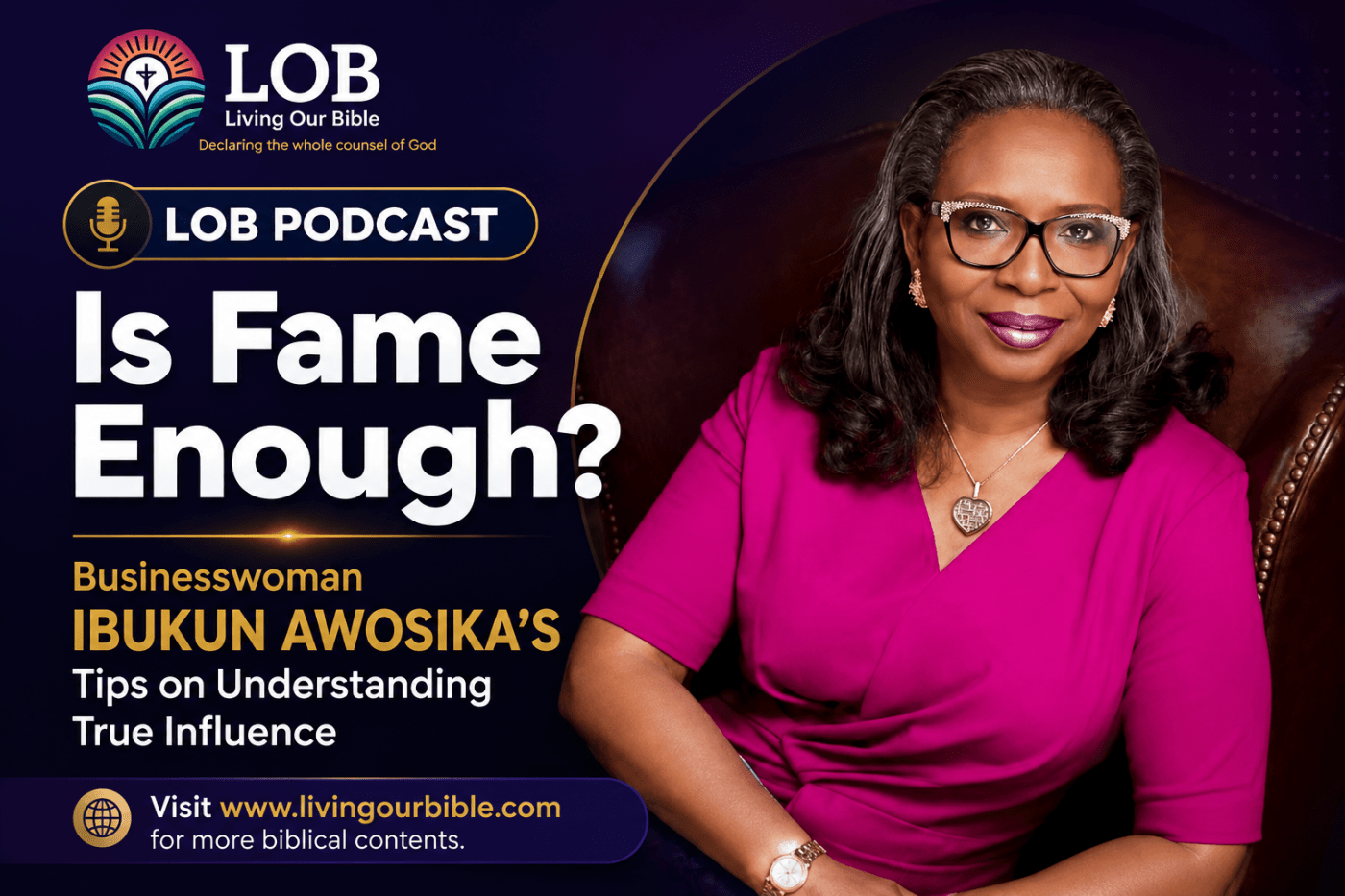
Pip: Social media has given everyone a stage, but Ibukun Awosika would like a word about who should actually be standing on it.
Mara: This episode draws on Eric Otchere’s reporting on Awosika’s warning about visibility, influence, and the discernment Christians need in a culture where fame and credibility have become dangerously easy to confuse. Let’s start with what she actually said — and why it matters.
“Visibility Is Not Influence” — Awosika’s Warning to the Scrolling Generation
Pip: The central tension here is one the internet has made urgent: being seen everywhere is not the same as being worth listening to, and conflating the two has real consequences for the people who follow you.
Mara: Awosika sets this up directly on the Godman Akinlabi Podcast. Her framing is careful — she is not dismissing visibility, but conditioning it: “Being visible makes you have the capacity to be influential. But there are many people that are visible, and they must pass certain tests for us to consider them as being positive influence.”
Pip: So visibility is a door, not a credential. What she is saying in practice is that reach without integrity is just exposure — and exposure handed to the wrong person is a liability, not a platform.

Mara: She goes further on what that liability looks like. Influence, she argues, has become “a tradable product,” which means the market for it operates on attention rather than merit. That is what makes discernment so necessary rather than optional.
Pip: Tradable product is a striking phrase — it means influence can be bought, packaged, and sold without the underlying substance ever being checked.
Mara: And the stakes she names are personal, not abstract. She addresses parents and young people directly: “We must be more deliberate and intentional about the people that we then open ourselves to, to have the power of influence over our lives and over the lives of our children.”
Pip: That is the sharpest line in the piece — it relocates the responsibility. The question is not only what influencers are doing, but what we are permitting.
Mara: She also flags manufactured identities — online personalities projecting lifestyles that do not reflect reality — and calls on believers and leaders to develop the wisdom to separate, in her words, wheat from chaff. The whole conversation pushes toward authentic influence rooted in integrity rather than attention.
Pip: Which raises the obvious next question about what that integrity actually looks like when it is lived out, not just performed.
Mara: The through-line is accountability — not to an audience, but to something more durable than a follower count.
Pip: Visibility fades. Worth listening to is harder to fake for long. More from Living Our Bible next time.
Discover more from Living Our Bible
Subscribe to get the latest posts sent to your email.

